How Does the Range Rover Sport Conquer I-70 to Vail in Winter Conditions?
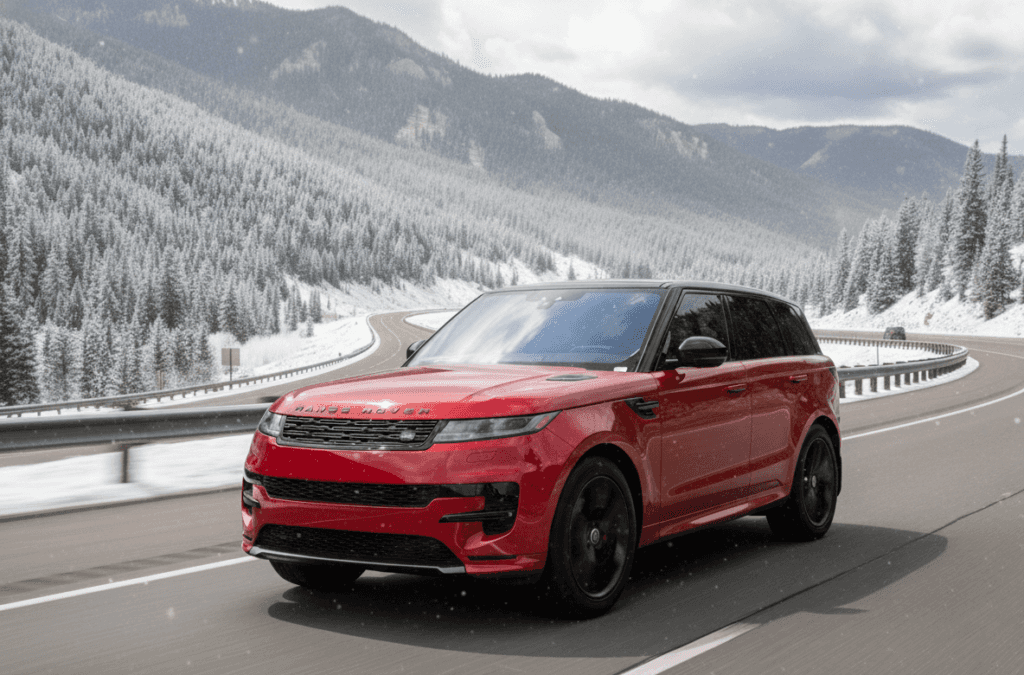
Colorado’s I-70 corridor from Denver to Vail represents one of America’s most challenging winter drives. Between Morrison (Mile Point 259) and Gypsum (Mile Point 140, this 126-mile stretch climbs through the Eisenhower Tunnel at over 11,000 feet elevation, delivering unpredictable weather, steep grades, and conditions that can shift from clear to chain-law enforcement in minutes. When ski reports flash “chains required,” most drivers pull over. Range Rover Sport drivers keep climbing.
At Land Rover Colorado Springs, we’ve equipped countless Colorado families with Range Rover Sport models that transform treacherous mountain drives into confident journeys. The vehicle’s combination of Terrain Response 2 technology, adaptive air suspension, and all-wheel drive creates a winter capability that turns Colorado’s most notorious highway into your personal proving ground.
What Makes I-70 to Vail Such a Challenging Winter Drive?
The I-70 Mountain Corridor presents unique challenges that separate capable vehicles from pretenders. This 126-mile section through the heart of the Rocky Mountains experiences some of Colorado’s most severe winter conditions, with elevation changes exceeding 6,000 feet and weather that can transform from sunshine to whiteout conditions within the span of a single mountain pass.
Understanding Colorado’s Traction Laws on I-70
Colorado enforces strict traction requirements from September 1 through May 31 on the I-70 corridor. The Passenger Vehicle Traction Law requires all four-wheel drive and all-wheel drive vehicles to maintain tires with at least 3/16-inch tread depth that carry mud and snow (M+S) ratings or the mountain-snowflake designation. During severe storms, the Colorado Department of Transportation activates the Passenger Vehicle Chain Law, requiring every vehicle to have chains or approved alternative traction devices installed. Chain and traction laws were activated 530 times last winter season on the I-70 corridor between Vail Pass and Morrison alone.
According to Colorado State Patrol Trooper Sherri Mendez, “I-70 is one of the most unique roads in the country and can be a challenging drive. With its high-traffic volumes, unpredictable winter driving conditions, low visibility and steep grades, it’s important for drivers to avoid tailgating and speeding.”
The Range Rover Sport’s standard all-wheel drive system and available M+S rated tires ensure compliance with Colorado’s traction laws, while its advanced capabilities mean you’re prepared for conditions that exceed minimum legal requirements.
Why Do Elevation Changes Create Dangerous Driving Conditions?
The westbound journey from Denver to Vail takes drivers from 5,280 feet at the Mile High City through the Eisenhower Tunnel at 11,158 feet before descending into Vail Valley. These dramatic elevation changes create microclimates where temperature drops can reach 20-30 degrees Fahrenheit within minutes. Snow can be falling at Loveland Pass while Georgetown basks in sunshine just 15 miles east.
The Eisenhower Tunnel marks the highest point, and immediately after exiting westbound, drivers face steep descents that challenge braking systems and vehicle stability. This combination of altitude, grade, and rapidly changing conditions explains why I-70 sees some of Colorado’s highest winter accident rates.
How Does Terrain Response 2 Optimize Performance in Snow?
Terrain Response 2 represents Land Rover’s patented system for optimizing vehicle performance across varying surfaces, tested in 20 countries at temperatures ranging from -40 to +125 degrees Fahrenheit. The system automatically reconfigures transmission, suspension, and traction settings to match driving conditions, providing the confidence Colorado drivers need when tackling I-70’s winter challenges.
What Are the Available Terrain Response Modes for Winter Driving?
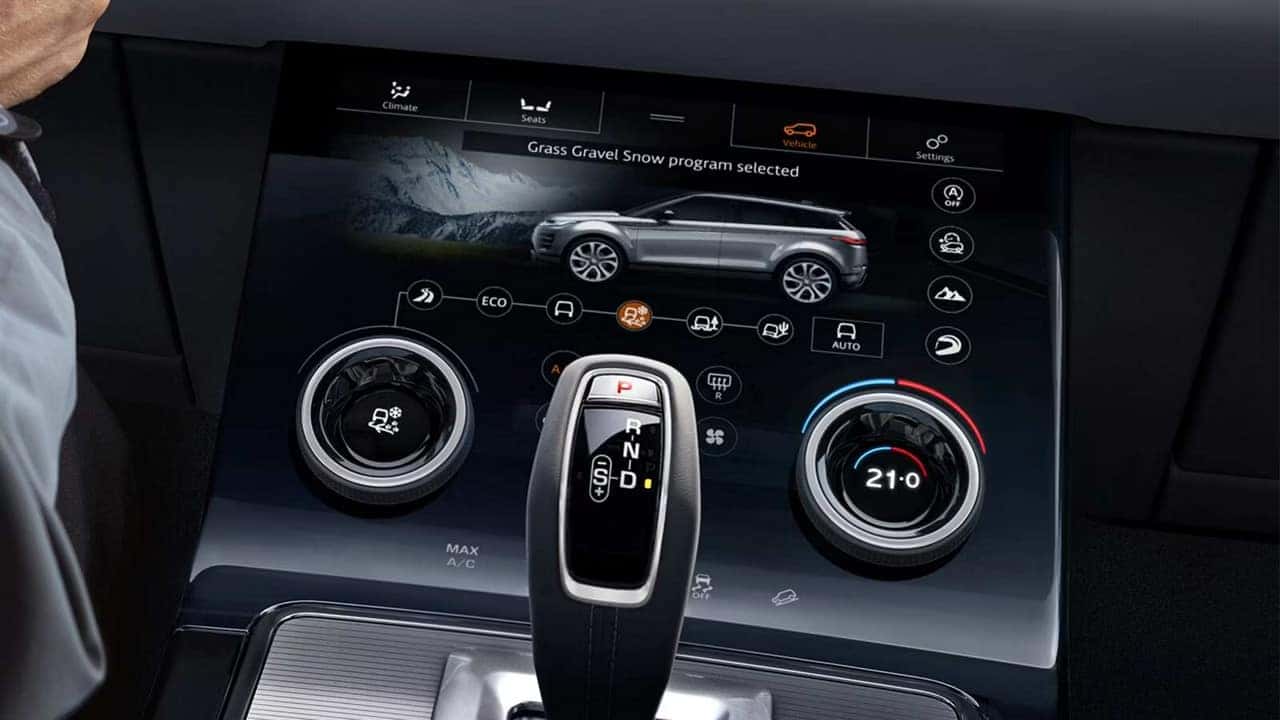
The Range Rover Sport offers several Terrain Response 2 modes specifically designed for Colorado winter conditions:
| Terrain Mode | Best Application | System Adjustments | Colorado Use Case |
|---|---|---|---|
| Auto | Mixed conditions | Automatically detects and adjusts to terrain within seconds | Variable I-70 conditions with frequent weather changes |
| Grass/Gravel/Snow | Slippery surfaces and deep snow | Early traction control intervention, softened throttle response, automated gear changes | Georgetown Hill, Vail Pass descents, active snowfall |
| Mud & Ruts | Slush and waterlogged areas | Optimized for controlled tire slip, best traction in slippery conditions | Spring runoff, slushy parking lots at Copper Mountain |
| Comfort/Normal | Clear highways, light precipitation | Maximizes fuel efficiency while maintaining all-weather capability | Denver to Morrison stretch, post-storm clear conditions |
How Does Auto Mode React to Changing Road Conditions?
Terrain Response 2’s Auto mode continuously monitors road conditions through multiple sensors, adjusting vehicle behavior within milliseconds. When the system detects wheel slip, temperature drops, or gradient changes, it proactively shifts settings before loss of traction occurs. This means as you climb from Idaho Springs toward the Eisenhower Tunnel and encounter the first patches of black ice, the Range Rover Sport is already preparing its systems for maximum grip.
The Auto setting eliminates guesswork during drives where conditions change rapidly. On I-70, where a single 20-mile stretch might include dry pavement, packed snow, ice, and slush, Auto mode provides seamless transitions without driver intervention.
Should You Use Manual Snow Mode or Trust Auto on I-70?
Manual Grass/Gravel/Snow mode offers proactive optimization rather than Auto mode’s reactive approach. When you manually select Snow mode, the Range Rover Sport’s systems are pre-configured for slippery conditions before encountering them. This provides several advantages for I-70 winter driving:
- Immediate readiness: The vehicle starts in low-traction configuration, preventing the momentary slip that occurs when Auto mode detects and reacts to conditions
- Low traction start: Specialized launch control prevents wheel spin when starting from stops at traffic lights or chain-up areas
- Consistent behavior: Predictable performance eliminates surprises when conditions worsen unexpectedly
- Hill Descent Control activation: Automatically engages when needed for steep downhill sections
For experienced Colorado drivers familiar with I-70’s personality, manual Snow mode provides the ultimate control. For those less familiar with mountain driving or making occasional ski trips, Auto mode delivers excellent protection with zero learning curve.
What Role Does Air Suspension Play in Winter Capability?
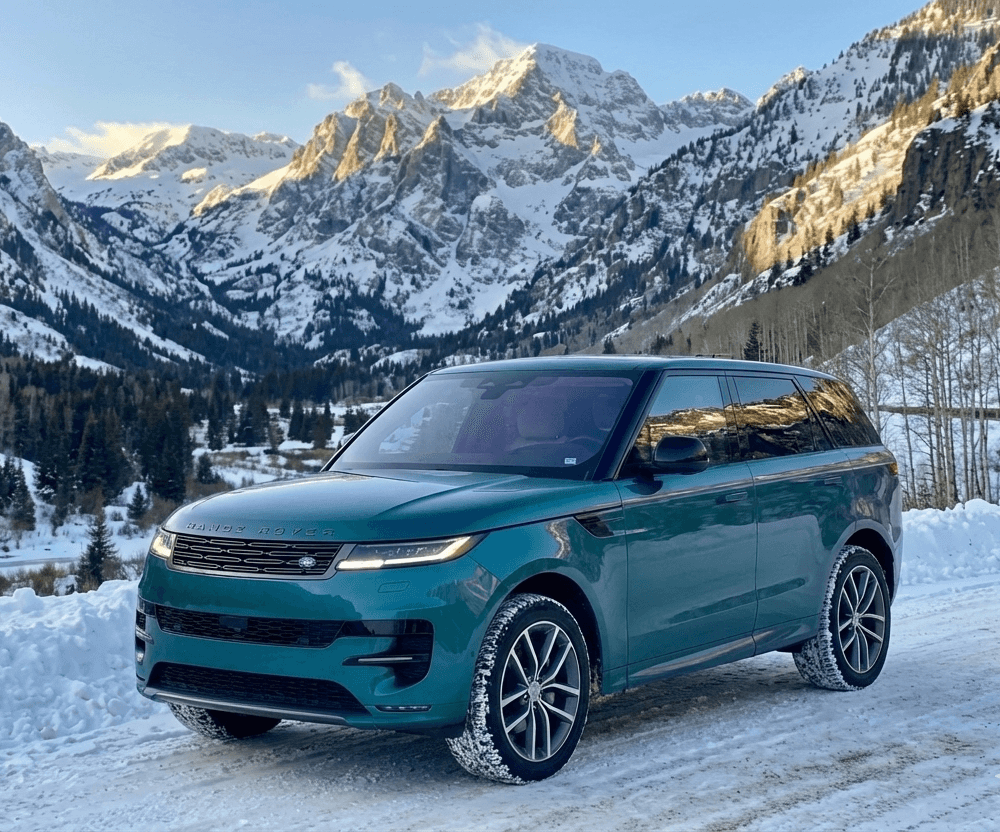
The Range Rover Sport’s standard adaptive air suspension represents a critical advantage for Colorado winter driving, offering ground clearance adjustments that transform capability in real-time. Unlike fixed-height suspension systems found in competing luxury SUVs, the Range Rover Sport’s air suspension delivers both the clearance needed for deep snow and the stability required for high-speed highway driving.
How Much Ground Clearance Does the Range Rover Sport Provide?
The Range Rover Sport offers adjustable ground clearance ranging from 8.5 inches to 11.1 inches, depending on selected mode and driving conditions. At maximum height, the vehicle provides clearance superior to the BMW X5 (8.7 inches), Mercedes-Benz GLE (9.5 inches), and Audi Q7 (9.6 inches). This additional clearance makes the difference between confidently crossing accumulated snow at Georgetown exit ramps and scraping underbody components.
The system automatically adjusts height based on speed and terrain. At highway speeds on clear I-70 sections, the suspension lowers to improve aerodynamics and fuel efficiency. When you slow for deteriorating conditions or activate off-road modes, the system raises to provide maximum clearance.
Can the Air Suspension Improve Traction on Icy Roads?
The adaptive air suspension continuously monitors and adjusts damping rates to optimize tire contact with the road surface. On I-70’s notorious ice patches—particularly common on shaded sections near tunnels and under overpasses—the system responds within milliseconds to maintain consistent tire pressure against the pavement.
When one wheel encounters ice while others maintain grip, the air suspension independently adjusts each corner’s damping characteristics. This keeps the vehicle planted and reduces the dramatic weight transfers that cause loss of control in fixed-suspension vehicles.
How Does Air Suspension Handle I-70’s Steep Grades?
The Range Rover Sport’s air suspension includes auto-leveling functionality that maintains optimal ride height regardless of load or grade. When descending Vail Pass’s steep western slope, the system prevents nose-diving that reduces front tire effectiveness and increases stopping distances. Climbing the eastern approach to Eisenhower Tunnel, it prevents rear squat that can reduce rear-wheel traction.
The suspension also features adjustable damping that stiffens in Sport mode for better body control during aggressive driving, or softens in Comfort mode to absorb the broken pavement common on I-70 after seasonal freeze-thaw cycles.
Why Is All-Wheel Drive Essential for Colorado Mountain Passes?
The Range Rover Sport’s permanent all-wheel drive system with Active Driveline technology distributes power continuously to all four wheels, adjusting torque split based on available traction. Unlike part-time systems that default to two-wheel drive for efficiency, the Range Rover Sport maintains constant four-wheel engagement, providing immediate response when conditions deteriorate.
How Does the All-Wheel Drive System Distribute Power?
The Active Driveline can vary torque distribution from 100% rear to 50/50 front-rear split within milliseconds based on wheel slip, gradient, and steering input. On I-70’s changing surfaces, this means power flows to wheels with grip while preventing wheel spin on ice or snow.
The system’s intelligence extends beyond simple traction control. It predicts slip before it occurs based on throttle position, steering angle, and road conditions detected through multiple sensors. This predictive capability keeps the Range Rover Sport moving forward when reactive systems would allow initial wheel spin before correction.
What Advantage Does Permanent AWD Provide Over Part-Time Systems?
Many competing luxury SUVs use part-time all-wheel drive that operates primarily in front-wheel or rear-wheel drive, engaging the secondary axle only after detecting slip. This creates a momentary delay and loss of momentum—potentially critical when merging onto I-70 from chain-up areas or accelerating up the steep grade approaching Loveland Pass.
The Range Rover Sport’s permanent system eliminates this lag, providing consistent four-wheel traction from the moment you press the accelerator. On Colorado mountain passes where momentum matters and conditions change rapidly, this instant response prevents the stuck situations that block traffic and trigger chain law closures.
How Does the Range Rover Sport Compare to Competing Luxury SUVs?
While several luxury SUVs claim winter capability, the Range Rover Sport’s purpose-built approach to all-weather performance creates measurable advantages for Colorado drivers tackling I-70’s demands.
| Feature | Range Rover Sport | BMW X5 | Mercedes-Benz GLE | Audi Q7 |
|---|---|---|---|---|
| Ground Clearance (max) | 11.1 inches | 8.7 inches | 9.5 inches | 9.6 inches |
| Water Wading Depth | 35.4 inches | 19.6 inches | 23.6 inches | 23.6 inches |
| Terrain Management | Terrain Response 2 (6 modes) | xDrive (limited modes) | Dynamic Select (5 modes) | Drive Select (7 modes) |
| Suspension Type | Adaptive Air (standard) | Air (optional) | Air (optional) | Air (optional) |
| All-Wheel Drive | Permanent AWD | xDrive (part-time) | 4MATIC (permanent) | quattro (permanent) |
| Towing Capacity | 7,716 lbs | 7,200 lbs | 7,700 lbs | 7,700 lbs |
What Do Automotive Experts Say About Range Rover Sport’s Winter Performance?
The Range Rover Sport consistently earns recognition for its balance of luxury and capability. U.S. News & World Report notes that the Range Rover Sport “doesn’t come with all-terrain tires, but it’s very capable in the dirt” and praises its “peerless ride quality.” The publication’s testing revealed that “all Range Rover Sports get a standard adaptive air suspension that can give the SUV as much as 11 inches of ground clearance” while maintaining the refinement expected from a luxury vehicle.
Automotive journalists comparing the Range Rover Sport to German competitors consistently highlight its superior off-road capability. One comprehensive comparison noted, “The Range Rover Sport is an alternative out of left field in this company” with “a sense of regality around the Range Rover that just cannot be matched by the Germans here.”
What Safety Technologies Protect Against Winter Hazards?
The Range Rover Sport includes comprehensive safety systems that address winter-specific risks:
- Emergency Braking with Pedestrian Detection: Accounts for reduced visibility in snow and fog
- Lane Departure Warning and Lane Keep Assist: Compensates for obscured lane markings on snow-covered roads
- Blind Spot Monitoring: Essential when snow accumulation on windows reduces visibility
- 360-Degree Camera System: Provides clear view of surroundings when backing out of snow-covered parking spots
- Adaptive Cruise Control with Stop & Go: Maintains safe following distance in heavy I-70 traffic during storms
Does the Range Rover Sport Include Heated Features for Colorado Winters?
Standard heated front seats provide immediate warmth during cold starts at Colorado ski areas. Available heated rear seats ensure passenger comfort during the hour-plus drive from Colorado Springs to Vail. The heated steering wheel—a feature missing from base trims of competing vehicles—delivers comfort during early morning departures when temperatures hover in single digits or below zero.
The Climate Comfort Package adds heated and ventilated front seats with massage functionality, perfect for the long drives between Colorado Springs and summit-area ski resorts. The cabin air filtration system with Nanoe technology removes allergens and odors while providing warm, clean air during winter journeys.
Frequently Asked Questions: Range Rover Sport Winter Performance
Can the Range Rover Sport handle I-70 without chains?
Yes, the Range Rover Sport with proper M+S or mountain-snowflake rated tires meets Colorado’s Passenger Vehicle Traction Law requirements. The standard all-wheel drive, Terrain Response 2, and adaptive air suspension provide capability that exceeds minimum legal standards. However, during extreme conditions when the Passenger Vehicle Chain Law is activated, all vehicles must have chains or approved alternative traction devices installed.
How does the Range Rover Sport perform at high altitude?
The Range Rover Sport’s turbocharged engines maintain strong performance at Colorado’s high elevations. The 3.0-liter inline-six produces 355 horsepower and 369 lb-ft of torque, with turbocharging compensating for the air density reduction at 11,000+ feet. The vehicle’s advanced engine management systems adjust fuel delivery and boost pressure to maintain optimal performance from Denver’s 5,280 feet through the Eisenhower Tunnel at 11,158 feet.
What fuel economy can I expect during winter I-70 drives?
Winter driving conditions, elevation changes, and cold temperatures reduce fuel economy compared to summer highway driving. Expect real-world fuel economy of 16-19 mpg during I-70 winter drives, depending on weather conditions, traffic, and driving style. The P360 model with mild-hybrid technology offers the best efficiency, while the P400e plug-in hybrid can complete short trips on electric power alone.
Is the Range Rover Sport suitable for Colorado Springs to Vail ski trips?
Absolutely. The Range Rover Sport excels at Colorado ski trips, offering 31.9 cubic feet of cargo space behind the second row (expandable to 53 cubic feet with seats folded) for ski equipment and luggage. The power liftgate and adjustable air suspension make loading skis and gear convenient. The approximately 200-mile round trip from Colorado Springs to Vail falls well within the vehicle’s comfort zone, with multiple drive modes ensuring appropriate settings for highway cruising and mountain pass navigation.
Where Can Colorado Drivers Test the Range Rover Sport’s Winter Capabilities?
At Land Rover Colorado Springs, we invite you to experience the Range Rover Sport’s winter performance firsthand. Our dealership at 565 Automotive Drive in Colorado Springs maintains a comprehensive inventory of Range Rover Sport models equipped for Colorado driving conditions.
Schedule Your Winter Test Drive Today
Contact Land Rover Colorado Springs at 719-355-3586 to arrange a test drive that showcases the Range Rover Sport’s capabilities on Colorado roads. Our team can demonstrate Terrain Response 2 modes, air suspension adjustment, and all-wheel drive performance in real-world conditions.
Visit us at 565 Automotive Drive, Colorado Springs, CO 80905 to explore our Range Rover Sport inventory and discover why this luxury SUV has become the choice of discerning Colorado drivers who demand both refinement and capability.
Experience the Difference of Authentic Land Rover Winter Capability
When ski conditions are perfect and I-70 reports read “chains required,” the Range Rover Sport transforms challenging drives into opportunities for adventure. Its combination of Terrain Response 2, adaptive air suspension, and permanent all-wheel drive creates confidence that competing luxury SUVs simply cannot match.
From Colorado Springs to Vail Village, the Range Rover Sport delivers arrival on time, every time—regardless of what winter throws at Colorado’s most challenging mountain corridor. The question isn’t whether the Range Rover Sport can conquer I-70 in winter. The question is: are you ready to experience Colorado mountain driving the way it was meant to be?
Contact Land Rover Colorado Springs today at 719-355-3586 or visit our showroom to discover how the Range Rover Sport can transform your Colorado winter driving experience.
